Ahti.
A phytoplankton-based carbon capture system for industry.
- Francesca Zampini, Sara Labidi
- Concept, problem solving, technical development, interviews
- In development
- 2025
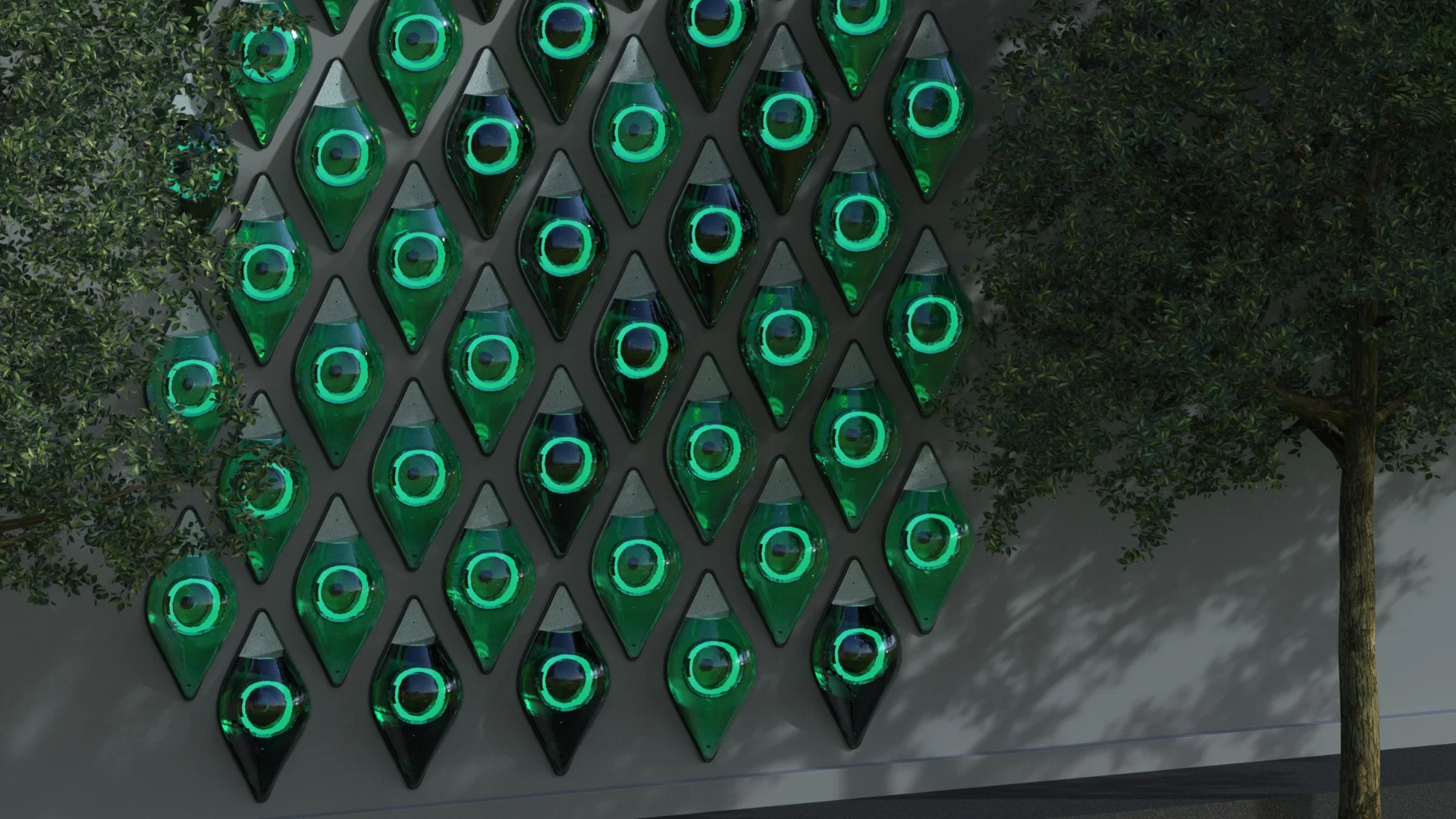
Overview
Ahti brings one of nature's most efficient carbon sinks onto the walls of industrial buildings. Its modules, filled with phytoplankton, capture CO₂ from flue gases and combine to fit each facility. Submitted to the James Dyson Award 2025, it is now being developed with engineers within the YIELD Programme, an international startup incubator.
Problem
Industry produces roughly a quarter of global greenhouse gas emissions. Traditional carbon capture is expensive, energy-intensive and hard to adapt from one site to another. One standard machine rarely fits the reality of a specific plant.
Insight
No two industrial sites need the same solution. So the answer could not be a single machine: it had to be a system each company can configure around its own needs.
The engine for it already existed in nature. Phytoplankton absorb CO₂ through photosynthesis, and microalgae fix carbon far more efficiently than land plants.

Solution
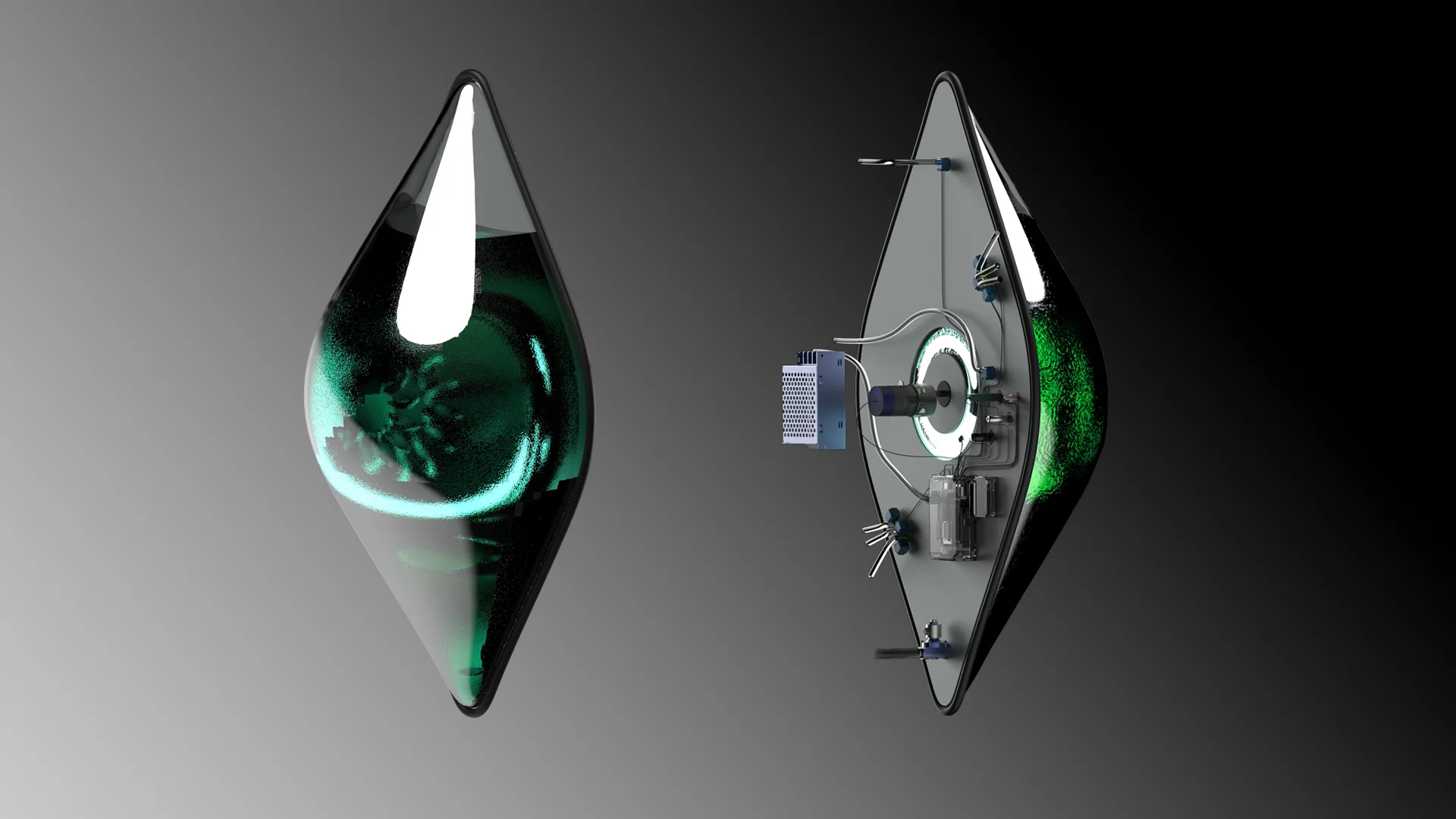
Ahti is a modular photobioreactor mounted on the facades of industrial buildings and connected to their flue gases. Inside each module, phytoplankton turn CO₂ into biomass and release oxygen.
Modules can be added and combined, so the system matches the scale and configuration each company needs, working with existing infrastructure instead of replacing it.
Nothing goes to waste: the biomass could become a supplement, 3D printing filament, fabric or biofuel, or return to the ocean. These uses are still under evaluation.


A self-regulating system
Sensors track pH, temperature, O₂, chlorophyll and CO₂ in every module. When a culture saturates or an algal bloom starts, an AI-IoT control unit dilutes it into neighbouring modules.
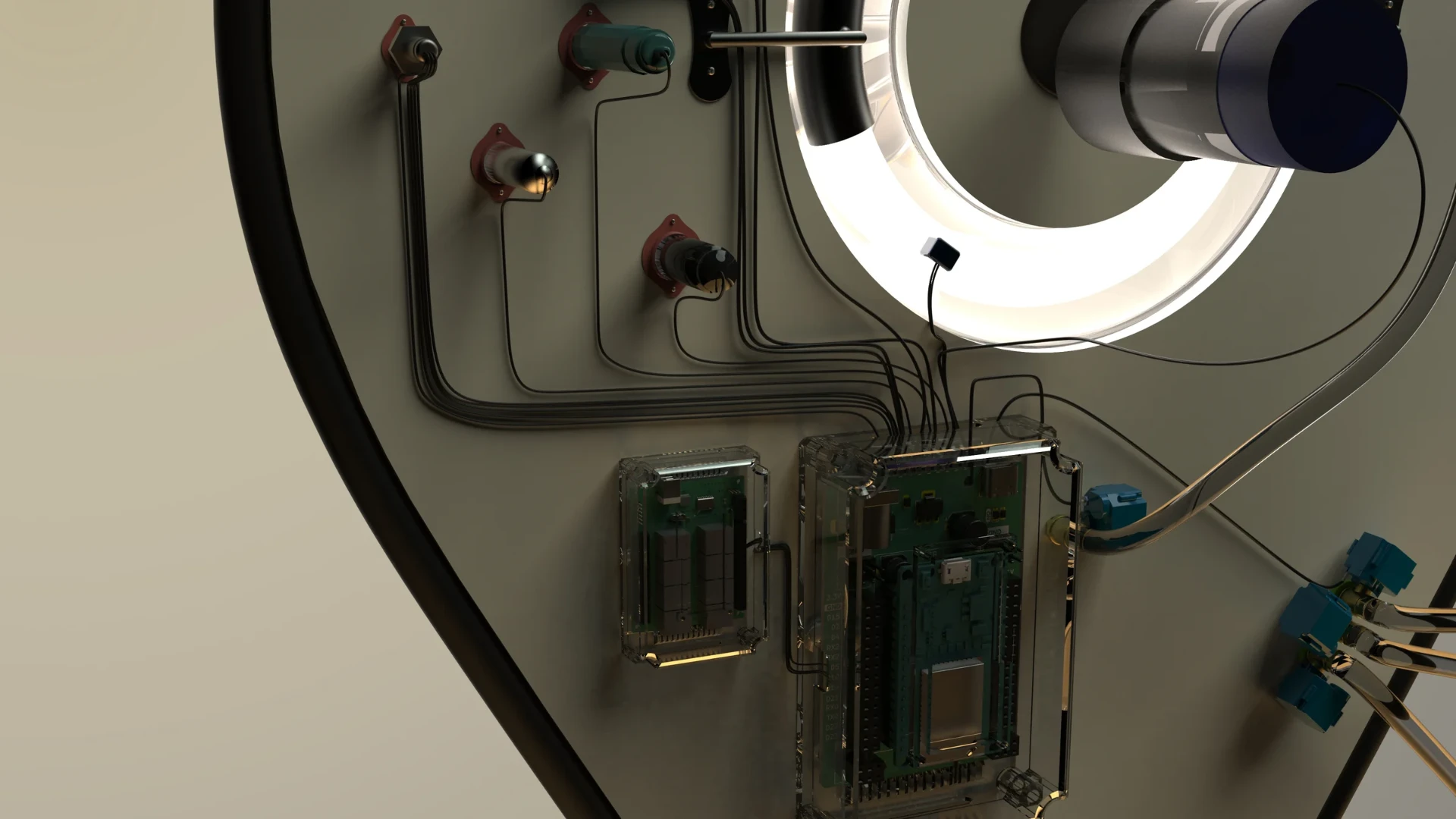

Process
I led the concept, much of the technical problem solving and the interviews with biologists and engineers that shaped the project.
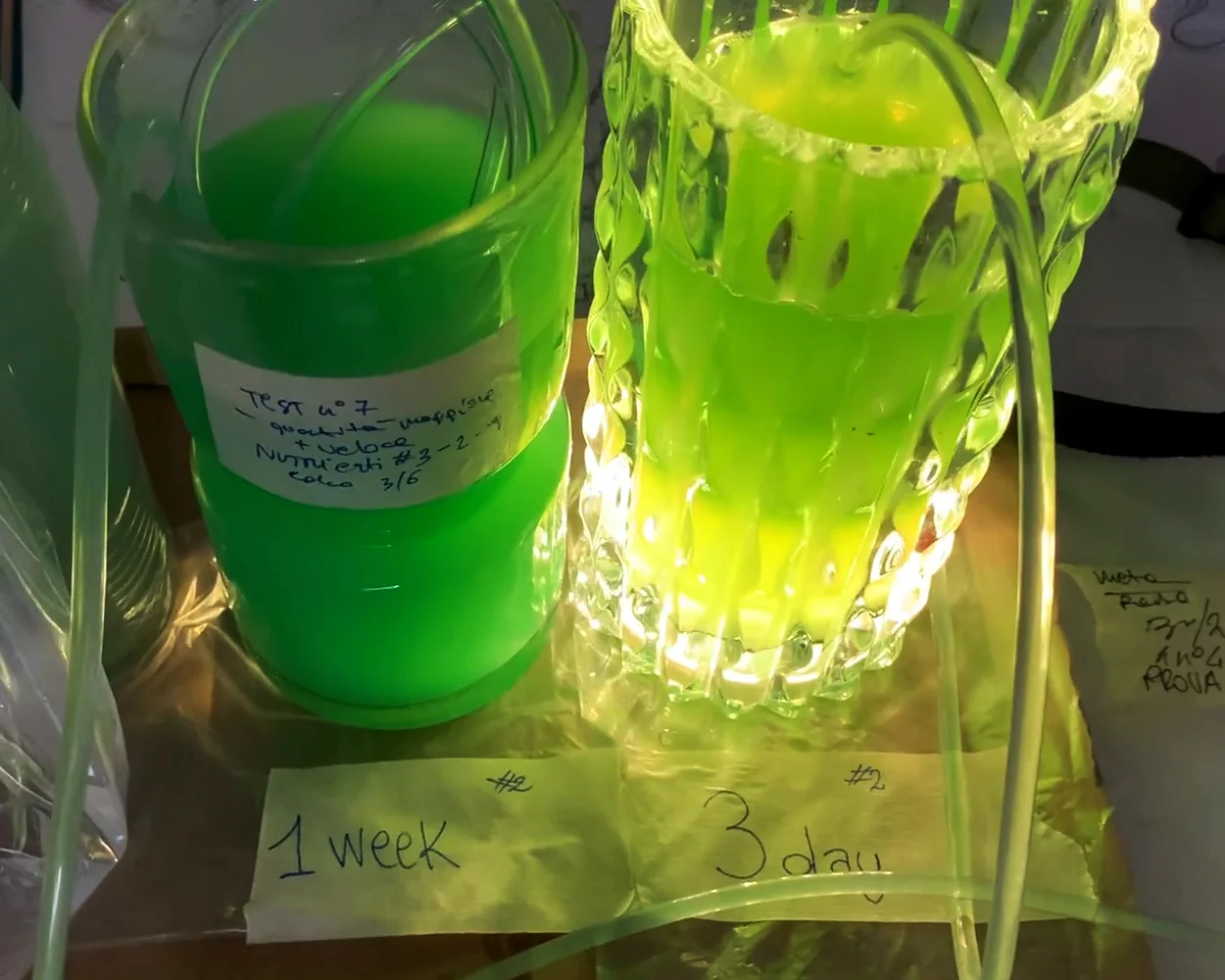
We ran culture tests on phytoplankton, comparing growth over time and different nutrient mixes. Today we are reviewing the technical calculations with engineers to bring Ahti to a working prototype.
Where it's going
Ahti is now part of the YIELD Programme, an international startup incubator. Next step: a working prototype, backed by validated engineering.
Designed with Sara Labidi.